I have had a couple of low vision patients recently who both commented on the length of time that I spent with them doing the low vision evaluation. One came to me from Maryland. Over the 5 years that he has had macular degeneration his vision has reached the point that he requires someone to do his driving and has given up some of the very detailed work that he has done in his hobby of making reproductions of antique furniture. His occupation requires that he use blueprints often. His, off the shelf, hand magnifier was not helping him much with the blueprints. He had been seen many times by the doctors at Johns Hopkins and at the National Retina Institute. One had recommended that he begin to learn braile.
I spent well over an hour with him, carefully evaluating his vision with various low vision devices. The end result was that when he receives his low vision glasses in a few weeks he will be able to easily read his blue prints, see TV better and be able to drive safer. The same glasses that help with the blueprints will help him with the fine details of furniture making.
The earlier patient, a lady from West Virginia, was also suffering from macular degeneration. She had traveled to Germany where she underwent a stem cell procedure intended to improve vision. The results of that were very shortlived. Later she received acupuncture in New Mexico at a clinic that helps people with reduced vision. When she discovered that she would have to continue going there every month or so she discontinued her treatment.
As always, I spent well over an hour with her ,evaluating her vision, with a variety of devices. My goal was to help her with the activities most important to her, reading and watching TV. For reading I prescribed a handheld electronic magnifier. She was able to read newspaper or magazine print with it. Help for the TV was provided by telescopic glasses that magnified the picture. An additional lens that she can easily add to the telescopic glasses helps her read from the screen of her computer.
Both of these people had been seen by many doctors in many different locations. Both had been told that nothing further could be done to help them. Neither of them had a low vision evaluation until coming to me. Helping people with low vision takes time as well as skill. It is not something that can be done in a 10 minute exam or delegated to a member of the staff. A doctor, almost always an optometrist, who is serious about helping patients with low vision will arrange his/her schedule to allow enough time for the evaluation.
If you have macular degeneration, diabetic retinopathy, retinitis pigmentosa, Stargardt's disease or any other condition that has reduced your vision call me. I will return your call and spend a few minutes with you discussing your present condition, your goals and will give you an honest opinion of whether I can help you. Only if I feel that I can help you will I schedule you for a low vision evaluation. Because I have had lots of experience with these phone interviews I am able to help over 90% of the low vision patients who I see for an evaluation. The call and the telephone interview are free. Call me toll free at 1 866 321-2030. I look forward to speaking with you.


Popular Posts
-
 I recently dispensed low vision glasses to Kris Cavanagh, a young mom from Virginia. Kris has had Stargardt's Disease for about 9 yea...
 -
The National Eye Institute has just published a fact sheet for consumers which helps clarify the use of vitamin supplements for persons with...
-
 VisionCare Ophthalmic Technologies has named Dr. David L. Armstrong to it's CentraSight Provider Team for the State of Virginia. Dr. ...
 -
 Kelly Henley was diagnosed with juvenile macular degeneration (also known as Stargardt's Disease) when he was in grade school. Over ...
 -
A nice 30 year old lady came to see me in my Harrisonburg office. She had suffered from Stargardt's Disease since age 9. Her optometri...
About Me
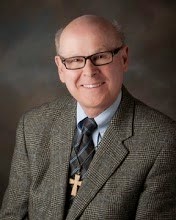
- Dr. David L. Armstrong
- Dr. Armstrong has practiced optometry in Virginia for over 35 years. He serves low vision patients from offices in Roanoke, Charlottesville, Harrisonburg and Wytheville,Virginia. Dr. Armstrong's experience includes serving as an optometry officer in the U.S. Army, member of the medical staff at the Veterans Administration Hospital in Salem, VA, consulting optometrist for the Virginia Department of Corrections in addition to his private optometry practice. He is a member of the Virginia Optometric Association, the American Optometric Association and the International Academy of Low Vision Specialists. For more information visit www.VirginiaLowVision.com