When I talk with people who have experienced a vision loss from eye disease I always ask what they would like to be able to do if I am able to help them. A large number would like to return to driving. Some have given up driving voluntarily and others have been unable to meet the requirements of the DMV and have lost their license. In either case they have lost their independence. They are now dependant on others to help them do the simplest of things, like a trip to the grocery store or post office or church.
Let me explain a bit about driving with low vision glasses. Bioptic telescopic glasses have small telescopes imbedded in the upper part of the regular lens. The person's eyeglass prescription is in the telescope as well as the regular lens. The telescope is used to spot things that need to be seen better like traffic signals, signs, other cars, people, etc. The person just lowers their chin a little, takes a quick look through the telescope and then goes back to driving with the main lens of the glasses, called the carrier lens. You will see examples of my patients wearing bioptic telescopes as I begin to post actual patient experiences and photos.
The laws are different in each state regarding driving with bioptic telescopes. Some allow persons to be licensed to drive with these special glasses and some states do not. All states will allow you to drive with the telescopic glasses if you already have a valid license. If you are wondering about your state's regulations you can check with the DMV or call me toll free and I'll tell you what your state allows and we can talk about whether you are likely to be able to meet the requirements. Call me at 1 866 321-2030. There is no charge for the call or the consultation.
My state, Virginia, is one of the states that issues a special driver's license for persons requiring bioptic telescopic glasses. Our DMV requires at least 20/200 in the better eye with the normal eyeglass lenses and improved to 20/70 with the bioptic. There is also a requirement of 150 degrees of peripheral vision (visual field). Once the person obtains the bioptic glasses they must use them daily for 2 months and then return to the low vision doctor for certification that they meet the above requirements.
If you think that you might require this type of license do not wait until the last minute. Call for an appointment 4 or 5 months in advance. That will allow time to have the low vision evaluation, receive the glasses and use them for the required 2 months before your license expires.
Many people have returned to safe driving by using bioptic telescopic glasses. Perhaps you could become one of them. For more information about help for low vision go to www.VirginiaLowVision.com


Popular Posts
-
 I recently dispensed low vision glasses to Kris Cavanagh, a young mom from Virginia. Kris has had Stargardt's Disease for about 9 yea...
 -
E Scoop eyeglasses are one of the newest devices for patients with low vision. They were developed in The Netherlands, for macular degenera...
-
I have posted several YouTube videos that may be interesting to anyone dealing with low vision. Here is a partial list of links: Low Vi...
-
 Kelly Henley was diagnosed with juvenile macular degeneration (also known as Stargardt's Disease) when he was in grade school. Over ...
 -
A nice 30 year old lady came to see me in my Harrisonburg office. She had suffered from Stargardt's Disease since age 9. Her optometri...
About Me
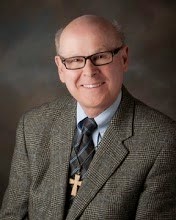
- Dr. David L. Armstrong
- Dr. Armstrong has practiced optometry in Virginia for over 35 years. He serves low vision patients from offices in Roanoke, Charlottesville, Harrisonburg and Wytheville,Virginia. Dr. Armstrong's experience includes serving as an optometry officer in the U.S. Army, member of the medical staff at the Veterans Administration Hospital in Salem, VA, consulting optometrist for the Virginia Department of Corrections in addition to his private optometry practice. He is a member of the Virginia Optometric Association, the American Optometric Association and the International Academy of Low Vision Specialists. For more information visit www.VirginiaLowVision.com