No Risk Low Vision Promise

You may have been told by your eye doctor that nothing can be done to help you. You may be hesitant to schedule an appointment with a doctor dedicated to helping persons with low vision achieve their goals. Having special glasses that will allow you to return to activities that you’ve given up may sound too good to be true.

To help you decide to schedule a low vision evaluation I make the following promises:
1. I will accept you for a low vision evaluation only after I have interviewed you on the telephone and I sincerely believe I can help.
2. If I accept you as a low vision patient it is because, as a result of your answers to my questions, I believe that you will benefit from low vision glasses or other devices.
3. During the first few minutes of the visit I will demonstrate to you that I can help you see better. The remainder of the evaluation will be used to determine the best low vision devices for your needs. The evaluation fee is $235.
4. If, during the first few minutes, I cannot demonstrate that I can help you see better, the evaluation will be terminated and there will be no fee charged.
5. During the evaluation I will show you exactly how various low vision glasses will help you. You will see exactly how they help and what they look like.
6. At the end of the evaluation I will tell you exactly which glasses I am prescribing for you and their cost. You will have the opportunity to choose how much help you want and how much you wish to pay.
7. When you receive your low vision glasses I will again demonstrate that they help you more than your previous glasses. If you do not see an improvement the fees that you paid for the glasses will be refunded. The evaluation fee is non-refundable.

I make these promises based on years of experience helping persons with macular degeneration, diabetic retinopathy and other eye diseases. Because of this experience I have the skills to identify people who I can help and to prescribe appropriate low vision glasses for their needs. Call me for a free telephone consultation. 1 866 321-2030 (toll free)

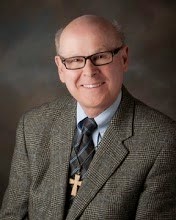
Dr. David L. Armstrong, Optometrist

About Low Vision

Low vision is not the same as blindness. A person with low vision has some useful sight but has difficulty with the performance of daily activities. Conventional glasses do not provide sufficient vision for reading watching TV, using a computor, driving and other visual activities. Many eye conditions cause low vision.

A low vision doctor, like Dr. Armstrong, is often able to prescribe special glasses or other devices which magnify what is seen, making it easier to see. Many people who have been told that they are legally blind can be helped. When possible, we prefer to prescribe the magnification in glasses so both hands are free.

Patients with macular degeneration, diabetic retinopathy or other conditions are often told by their doctor that nothing can be done that will help. The doctor is correct that nothing can be done to cure these conditions causing low vision. A low vision doctor can help by evaluating the remaining vision and prescribing microscopic or telescopic eyeglasses that maximize the remaining vision.

To schedule a low vision evaluation call toll free 866 321-2030 for a free telephone consultation with Dr. Armstrong. Dr. Armstrong always speaks with low vision patients by phone and questions them to determine if low vision glasses will help. The appointment is only made when Dr. Armstrong feels that he will be able to help the person.

Low vision glasses are prescribed to meet the needs of each person so the costs vary. Usually low vision glasses for reading cost between $750 and $850. Telescopic glasses for driving or distance vision cost between $1750 and $2000.

Medicare, supplemental and other insurances do not pay for either the low vision evaluation or for the low vision glasses.


Friday, January 6, 2012

"I Can See Clearly Now, The Rain Is Gone"

  Clarisa Shepherd has a ministry of song.  She loves to sing in her church to praise the Lord.  She has had reduced vision since birth due to optic atrophy, an optic nerve disease.  She sees lights only with her right eye.  When she came to me Clarisa was using prismatic glasses prescribed by her previous eye doctor.  They allowed her to read but required her to hold her book or music just a few inches from her face.  She asked if there were glasses that would allow her to hold her music lower and farther from her face so her voice would project better and she could see the people she was singing to.
  The previous doctor had considered putting a small telescope in her glasses to allow for better distance vision.  Clarisa was unable to use that because her eyes are in constant motion, a condition called nystagmus.  The telescope was so small that she was unable to keep looking through it.
  After evaluating Clarisa's vision with various low vision devices I prescribed a wide angle telescope mounted in the left lens of her glasses.  The wide angle telescope gives her improved distance vision.  She has worn the telescope at a school play and was able to see the actors and follow the action on stage.  Two accessory lenses were prescribed which she can add to the telescopic lens.  One allows her to hold her music farther away and below eye level.  The other helps her read the screen of her computer.
  "Thank you very much for the glasses.  What a difference they make."  Clarisa is enthusiastic about her new low vision glasses.  "I love my new glasses.  I can see the music and also the audience.  I can stand back with the rest of the group and still read the music.  Reading is much better and my husband says that I am reading out loud much faster than before."
  It is very satisfying to be able to help people like Clarisa Shepherd.  If you have a vision loss that makes it difficult to do the normal, daily activities that you would like to do give me a call.  I will be happy to talk with you and tell you if I can help.  Call me toll free at 866 321-2030.