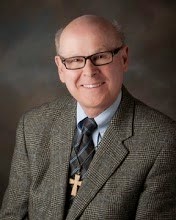
I have posted several YouTube videos that may be interesting to anyone dealing with low vision. Here is a partial list of links:
Low Vision Glasses for Reading
https://youtu.be/ehpIuBWi1uI
Bioptic Telescopic Glasses
https://youtu.be/0N9TSR7e38Y
Driving with Bioptic Glasses
https://youtu.be/Uk5k_DaXCeQ
"I've been fighting for my eyesight all of my life."
https://youtu.be/pZVJC-KdRiA
Free Telephone Consultation with Dr. Armstrong
https://youtu.be/KJkro7ZloQo
There is more info on my website www.VirginiaLowVision.com
Showing posts with label Stargardt's Disease. Show all posts
Showing posts with label Stargardt's Disease. Show all posts
Thursday, June 18, 2015
Friday, May 29, 2015
Driving Safely With Bioptic Telescopic Glasses
Kelly Henley returned to see me last week to be recertified for driving with bioptic telescopic glasses. In 1996 Kelly was told that he had to give up driving. His vision was getting worse and he was no longer able to meet the Virginia DMV vision requirements. He'd been diagnosed years before with juvenile macular degeneration (Stargardt's disease).
It was not until the spring of 2013 that Kelly learned that he might be able to obtain a special driver's permit allowing him to drive while wearing bioptic glasses. His optometrist referred him to me for a low vision evaluation and I prescribed the bioptics. After using them for a couple months he applied for a learner's permit and then the special license. The DMV examiner was pleased with Kelly's driving during a road test and he was granted the license.
At his visit last week I heard how well he is doing driving with the glasses and how happy he is to be back on the road. He and his wife recently took a vacation trip to the Smokey Mountains and Kelly drive the entire way, at least 400 miles.
Kelly Henley is a great example of how someone with a vision loss can return to normal activities by using low vision glasses. He's gotten his independence back. He's happy and I am happy to have been able to help him.
If you have a vision loss from Stargardt's or some other cause you owe it to yourself to investigate low vision glasses. Give me a call. I will be happy to discuss your vision and your goals. I'll tell you if I can help. There is no charge for the call or the telephone consultation. Call me at 866 321-2030
 |
| Kelly Henley |
At his visit last week I heard how well he is doing driving with the glasses and how happy he is to be back on the road. He and his wife recently took a vacation trip to the Smokey Mountains and Kelly drive the entire way, at least 400 miles.
Kelly Henley is a great example of how someone with a vision loss can return to normal activities by using low vision glasses. He's gotten his independence back. He's happy and I am happy to have been able to help him.
If you have a vision loss from Stargardt's or some other cause you owe it to yourself to investigate low vision glasses. Give me a call. I will be happy to discuss your vision and your goals. I'll tell you if I can help. There is no charge for the call or the telephone consultation. Call me at 866 321-2030


Tuesday, December 2, 2014
A Stargardt's patient told me "I Never Thought That Anything Would Help Me See Better"
A nice 30 year old lady came to see me in my Harrisonburg office. She had suffered from Stargardt's Disease since age 9. Her optometrist referred her hoping that I'd be able to help. Her visual acuity was 20/240 in both eyes. She is legally blind. Although telescopic and microscopic glasses did not make any improvement I did prescribe a portable electronic magnifier. She continues to use it and is able to read her checks, recipes, measurements and reading in general.
I notified her later when E Scoop glasses became available. They have helped several of my patients and she came for a trial. At the trial she was able to see my eyes from about 10 feet. She could see details in the houses across the street from the office and was able to see signs 100 feet away better.
When she returned to pick up the E Scoop glasses she said "This is great. I never thought that anything would help me see better".
If you'd like to speak with me about your vision problem please call me at 1 866 321-2030. There is no charge for the call or for the telephone consultation. I will ask you a few questions and tell you if low vision glasses will help you. I understand low vision and would like to help you. I look forward to talking with you.
I notified her later when E Scoop glasses became available. They have helped several of my patients and she came for a trial. At the trial she was able to see my eyes from about 10 feet. She could see details in the houses across the street from the office and was able to see signs 100 feet away better.
When she returned to pick up the E Scoop glasses she said "This is great. I never thought that anything would help me see better".
If you'd like to speak with me about your vision problem please call me at 1 866 321-2030. There is no charge for the call or for the telephone consultation. I will ask you a few questions and tell you if low vision glasses will help you. I understand low vision and would like to help you. I look forward to talking with you.
Monday, December 1, 2014
Driving With Stargardt's Disease
 A patient with Stargardt's Disease returned to me after using his bioptic telescopic glasses for over 5 years. Blake White was able to obtain his drivers permit when he got the telescopic glasses. He has been driving safely with them. Blake returned for re evaluation as required by the DMV. Blake and I were both pleased to find that heis still eligible to drive while wearing the special glasses.
Blake told me an interesting story. He has been seen by another low vision doctor who is a state examiner in West Virginia. That doctor prescribed a very small telescope, for his right eye only even though Blake's vision is almost equal in both eyes. Blake has been unable to wear them and prefers the wide angle telescopes that I prescribed. He misses the left telescope and also the wide view of the pair that I prescribed. He drives a lot and only uses the wide angle pair.
Years ago when I was a state examiner here in Virginia I realized that the devices available through the state were not always best for the patient. I gave up serving as a low vision examiner for the State of Virginia years ago. Since then I am able to prescribe what is most helpful for the patient, not just what the state will pay for.
Here is the point. If you have had a low vision evaluation and are not happy with the devices prescribed it may be helpful to see another doctor. Someone with a different perspective. A doctor who is not limited by the state may be able to help you. I invite you to give me a call. Let's talk it over. I will tell you on the phone if I will be able to help you. Call me toll free at 866 321-2030 For more information on help for low vision go to www.VirginiaLowVision.com #stargardtsdisease#bioptictelescopes
Wednesday, September 17, 2014
What is Stargardt’s Disease?
Stargardt’s Disease, a type of macular degeneration, effects over 25,000 Americans, occurring in about one in 10,000 children. Because it begins in children and young adults it is also known as Juvenile Onset Macular Degeneration. Like the more common Age Related Macular Degeneration, Stargardt’s damages the macula, the part of the retina responsible for central vision. As the central vision gets worse, reading, driving and other tasks requiring sharp vision become more difficult. Eventually Stargardt’s victims are unable to perform these tasks. Although the peripheral vision is unharmed, that is small comfort for the person who has lost the best, sharpest part of their vision. Children of a parent with Stargardt’s Disease have a 25-50% chance of developing the disease themselves.
There is no cure or treatment for Stargardt’s Disease. Persons with Stargardt’s are advised to protect their eyes from sunlight by using good sunglasses which filter out ultraviolet light. Genetic counseling is also recommended.
My experience has been that persons with Stargardt's Disease do very well with low vision glasses. They are often able to return to driving and other important activities. Anyone suffering a vision loss from Stargardt’s should consult a low vision optometrist for an evaluation.
You can call me toll free to discuss your vision problem. I will be happy to speak with you. After asking you questions about your remaining vision and your goals I will tell you if I can help you with low vision glasses. Call me at 866 321-2020#stargardtsdisease
There is no cure or treatment for Stargardt’s Disease. Persons with Stargardt’s are advised to protect their eyes from sunlight by using good sunglasses which filter out ultraviolet light. Genetic counseling is also recommended.
My experience has been that persons with Stargardt's Disease do very well with low vision glasses. They are often able to return to driving and other important activities. Anyone suffering a vision loss from Stargardt’s should consult a low vision optometrist for an evaluation.
You can call me toll free to discuss your vision problem. I will be happy to speak with you. After asking you questions about your remaining vision and your goals I will tell you if I can help you with low vision glasses. Call me at 866 321-2020#stargardtsdisease
Friday, March 21, 2014
More Low Vision Info on Facebook
I hope you'll take a look at my Facebook page. It's dedicated to low vision. I am posting interesting news related to people with macular degeneration, Stargardt's Disease, diabetic retinopathy and other diseases that reduce vision. In addition to that I post helpful tips for low vision patients, new developments and interesting patient experiences. The page can be reached by the link below. I hope you will take a look and decide to "Like" the page. As always, if you have questions or would like to discuss your vision problems give me a call. My toll free number 1 866 321-2030 gets you to the answering service and I'll personally call you back within a couple days. I hope you find the my Facebook page interesting and helpful. Please cut and paste the Facebook address below to access my Page. https://www.facebook.com/pages/Virginia-Low-Vision-Optometrist-Dr-David-L-Armstrong/660124997350141
Monday, March 10, 2014
Macular Degeneration. Legally Blind? Maybe, Maybe Not
A few days ago I saw two patients who had recently been told by their retinal specialists that they were legally blind and must stop driving. The first patient, a West Virginian, received a letter from the retinal specialist stating that his best vision with glasses was right eye 20/400 and left eye 20/300. That meets the definition of legal blindness. The patient's children asked him to quit driving although his wife, who often rode with him, had not noticed that he was having any problems driving. When he came to me for help his visual acuity was 20/120 in the better eye with his glasses. That's not legally blind but still not good enough to drive.
After a thorough low vision evaluation I prescribed spectacle miniature (bioptic) telescopic glasses. With them he sees 20/50 with his better eye. That will allow him to obtain a special license to drive in West Virginia while wearing the telescopic glasses.
This man was quite aggravated that the previous doctor had not actually checked his vision himself. He relied on a staff person to do that.
The other patient is a young Virginian who suffers from Stargardt's disease. Her vision without any lenses is 20/120 with each eye. Definitely not legally blind. Wearing the telescopic glasses that I prescribed, her vision improves to better than 20/60 with each eye. She will be able to drive in Virginia with a special permit requiring her to wear the telescopic glasses.
In a busy ophthalmolgy office patients are often turned over to staff members to do some of the basic testing. Especially with someone who has reduced vision from eye disease, that may not be the best thing for the patient. Both of these people had been told by the doctor, as a result of the technician's testing, that they must give up driving. In both cases, careful testing revealed much better vision than they had been told.
If you've been told that you should not drive because of your vision it may be a good idea to consult a low vision optometrist who will take the time to carefully evaluate and prescribe appropriate help. Of course, there are times when people must give up driving for safety reasons and I respect their decision to do that. Giving up driving is not an easy thing to do. Give me a call for a free telephone consultation. I will tell you if low vision glasses will help you get back to activities that you have had to give up. Call me toll free 1 866 321-2030 #stargardtsdisease #biopticdriving
After a thorough low vision evaluation I prescribed spectacle miniature (bioptic) telescopic glasses. With them he sees 20/50 with his better eye. That will allow him to obtain a special license to drive in West Virginia while wearing the telescopic glasses.
This man was quite aggravated that the previous doctor had not actually checked his vision himself. He relied on a staff person to do that.
The other patient is a young Virginian who suffers from Stargardt's disease. Her vision without any lenses is 20/120 with each eye. Definitely not legally blind. Wearing the telescopic glasses that I prescribed, her vision improves to better than 20/60 with each eye. She will be able to drive in Virginia with a special permit requiring her to wear the telescopic glasses.
In a busy ophthalmolgy office patients are often turned over to staff members to do some of the basic testing. Especially with someone who has reduced vision from eye disease, that may not be the best thing for the patient. Both of these people had been told by the doctor, as a result of the technician's testing, that they must give up driving. In both cases, careful testing revealed much better vision than they had been told.
If you've been told that you should not drive because of your vision it may be a good idea to consult a low vision optometrist who will take the time to carefully evaluate and prescribe appropriate help. Of course, there are times when people must give up driving for safety reasons and I respect their decision to do that. Giving up driving is not an easy thing to do. Give me a call for a free telephone consultation. I will tell you if low vision glasses will help you get back to activities that you have had to give up. Call me toll free 1 866 321-2030 #stargardtsdisease #biopticdriving
Wednesday, January 22, 2014
Phone Call from a Stargardt's Patient
I was speaking today with a lady from Florida who has been dealing with #Stargardt's Disease for many years. She'd discovered information about my low vision practice by surfing around the internet. Like many people with Stargardt's she checks often to see if any progress is being made that might help her. As I do with all low vision patients, I questioned her on the phone trying to determine if she has enough vision for her to benefit from low vision glasses. I want to be as positive as I can be that I will be able to help a person before I schedule their evaluation appointment. I do not schedule people unless I am quite certain that I'll be able to improve things for them I questioned the lady about her vision and found out that she is able to read if she uses a magnifier. She has a couple of them. With the strongest she is able to read magazine print. Of course, it is quite awkward reading with a magnifier and she would rather be using glasses. Based on the questioning I told her that I was quite certain that I'd be able to help her. She has made an appointment and will be coming to see me in Virginia in a few weeks. I appreciate all of my patients but especially admire the desire and perseverance of those who travel so far. It is so unfortunate that low vision help is unavailable closer to their homes. My experience helping Stargardt's patients has been very good. I've found that they adapt very well to microscopic and telescopic glasses as well as the other low vision devices that I prescribe. I am looking forward to helping this nice lady. #stargardtsdisease
Sunday, November 3, 2013
"I wish I'd known about you and these glasses 15 years ago."


Kelly Henley was diagnosed with juvenile macular degeneration (also known as Stargardt's Disease) when he was in grade school. Over the years his vision gradually declined until he was no longer able to drive. Without driving he was unable to work and had to retire early. He had been told by his eye doctor that there was no help for him. He eventually changed to a different optometrist who referred him to me for low vision help. When Kelly came to me his number one goal was to get back to driving. Additionally, he wanted to be able to recognize his friend's faces and read better. He's a sports fan and wanted to see the action better when he goes to games. Kelly's vision is not good enough to obtain a regular, unrestricted driver's permit in Virginia. With the help of the bioptic telescopic glasses that I prescribed for him he easily passed the vision requirements for a daylight license requiring that he wear the bipotics. In addition to the bioptics I also prescribed telemicroscopic glasses, a special telescope allowing both eyes to focus at about 12" from his face. Kelly is using them for reading, including studying the DMV manual. He's preparing to take the written and driving tests and get his license back. If you have had experiences like Kelly Henley and want help with your vision please give me a call. I will be happy to discuss your vision and your goals. I'll tell you if I can help you. I'd like to help you get back to reading, driving and other activities that are difficult for you. Call me toll free 866-321-2030.
Monday, August 5, 2013
Help for a Stargardt's patient
 I recently dispensed low vision glasses to Kris Cavanagh, a young mom from Virginia. Kris has had Stargardt's Disease for about 9 years and her vision is reduced to 20/120 in each eye. Stargardt's disease is also known as juvenile macular degeneration. Like macular degeneration, Stargardt's patients lose their central vision. Things straight ahead become progressively more blurred.
Kris' husband found about me from the internet. He has read the entries in this blog telling how others have been helped by low vision glasses.
About a month ago I performed a low vision evaluation on Kris. After evaluating her vision with several low vision devices I prescribed two different types of low vision glasses for her. The picture shows her with her new spectacle miniature (bioptic) telescopes. Because she is very light sensitive the lenses have a dark grey tint. The telescopes improve her vision from 20/120 to better than 20/60. That will allow her to obtain a special Virginia driver' permit allowing her to drive during daylight hours while wearing the bipotics.
The second pair have specially designed telescopic lenses focused at 10 feet. She will use them for watching television. By adding additional lenses over the telescopes they'll focus closer so she can use her computer without increasing the size of the font as much.
As they left my office, Kris and her son were excitedly talking about the things that they would be able to do now that she is able to see better. They are planning some miniature golf and Kris is looking forward to watching her son play flag football.
Tuesday, March 26, 2013
These New Glasses Give Me a Little Bit of Freedom
Four years ago, Clyde Sarver, woke up and discovered that he had suffered a severe vision loss in his left eye. The New Castle man had experienced a broken blood vessel in that eye. Soon after that Mr. Sarver began to notice that his vision in the right eye was becoming blurred. He was then diagnosed with macular degeneration. Although he is receiving treatment from his retinal specialist, his blurred vision continues to bother him.
Recently the 77 year old man visited Dr. David L. Armstrong, a Roanoke, VA optometrist, who often helps patients whose vision has been damaged by disease or injury. Dr Armstrong is one of a few optometrists nationally who care for patients with low vision.
Dr. Armstrong prescribed three different types of low vision glasses for Mr. Sarver, each for a different purpose. For driving and other distance vision, bioptic telescopic glasses were prescribed. Clear Image microscopic glasses were prescribed to help with reading. Mr. Sarver states that with them he is able to read as well as he did when he was a much younger man. A new type of glasses, called E-Scoop are for general use. Developed in The Netherlands, the E-Scoops magnify, improve contrast and divert the image away from the damaged macula. Mr. Sarver told Dr. Armstrong that he really likes that pair and takes them everywhere.
Although people with low vision cannot be helped with conventional eyeglasses, low vision optometrists are often able to prescribe special glasses, like Mr. Sarver’s, which help. There is no cure for macular degeneration, diabetic retinopathy, Stargardt’s Disease and other sight damaging diseases but appropriately prescribed low vision glasses often improve a person’s quality of life.
With his special new glasses Clyde Sarver is able to enjoy watching University of Virginia games on television, play solitaire on his computer and see better for outdoor activities. Now that he can see the print better he is getting back to reading. Being able to read has helped him maintain his interests. “I like to read absolutely everything that’s printed and now I can.”
Before getting his new low vision glasses, Mr. Sarver says “I plodded along, and tried to use magnifying glasses, but none worked well. These new glasses give me a little bit of freedom. I can go to town if I want.”
Dr. Armstrong always speaks with low vision patients by phone to determine if he can help them before scheduling an appointment. Call 866 321-2030 for a free telephone consultation with Dr. Armstrong
Recently the 77 year old man visited Dr. David L. Armstrong, a Roanoke, VA optometrist, who often helps patients whose vision has been damaged by disease or injury. Dr Armstrong is one of a few optometrists nationally who care for patients with low vision.
Dr. Armstrong prescribed three different types of low vision glasses for Mr. Sarver, each for a different purpose. For driving and other distance vision, bioptic telescopic glasses were prescribed. Clear Image microscopic glasses were prescribed to help with reading. Mr. Sarver states that with them he is able to read as well as he did when he was a much younger man. A new type of glasses, called E-Scoop are for general use. Developed in The Netherlands, the E-Scoops magnify, improve contrast and divert the image away from the damaged macula. Mr. Sarver told Dr. Armstrong that he really likes that pair and takes them everywhere.
Although people with low vision cannot be helped with conventional eyeglasses, low vision optometrists are often able to prescribe special glasses, like Mr. Sarver’s, which help. There is no cure for macular degeneration, diabetic retinopathy, Stargardt’s Disease and other sight damaging diseases but appropriately prescribed low vision glasses often improve a person’s quality of life.
With his special new glasses Clyde Sarver is able to enjoy watching University of Virginia games on television, play solitaire on his computer and see better for outdoor activities. Now that he can see the print better he is getting back to reading. Being able to read has helped him maintain his interests. “I like to read absolutely everything that’s printed and now I can.”
Before getting his new low vision glasses, Mr. Sarver says “I plodded along, and tried to use magnifying glasses, but none worked well. These new glasses give me a little bit of freedom. I can go to town if I want.”
Dr. Armstrong always speaks with low vision patients by phone to determine if he can help them before scheduling an appointment. Call 866 321-2030 for a free telephone consultation with Dr. Armstrong
Tuesday, January 1, 2013
Letter From A Patient
 "I wanted to say thank you for my new bioptic lenses and to let you know how much they are helping me. Because of your help, I am able to drive and remain independent, which are both huge blessings. The lenses allow me to read street signs while I drive and have also been incredibly helpful when I am in seminars or watching sporting events. As a high school math teacher, I attend meetings regularly and it is wonderful to be able to read the screen during a presentation. I was never really able to read a screen or board during classes in high school or college. My wife and I also love to go to football games and I watch her coach softball on a regular basis, so having the lenses has made these games so much more enjoyable.
I really cannot express how thankful I am or how big a blessing these lenses have been. Thank you, thank you, thank you!"
Most sincerely,
Travis Hardin
Friday, August 24, 2012
Stargardt's Patient Helped
 Travis Hardin was referred to me by his optometrist. Travis is a high school math teacher who has Stargardt's Disease His vision is gradually getting worse. With his present contact lenses he is no longer able to meet the requirements for a driver's permit in Virginia. Travis and his optometrist were hoping that I could prescribe telescopic glasses which would keep him driving. With his contact lenses Travis' best vision is 20/100 with each eye. As a result of the low vision evaluation I to prescribed bioptic telescopic glasses that help him see 20/40 with each eye. With the bioptic glasses Travis will meet the Virginia requirements for a special driver's permit. He will be able to continue driving.
The Virginia DMV issues the special permit if the person has at least 20/200 with the better eye with their glasses or contact lenses and can achieve 20/70 with one eye by using telescopic glasses. There is also a reqiurement of normal peripheral (side) vision.
If you have lost your permit or are afraid that you will not be able to pass the vision test at the DMV give me a call. You may be able to continue driving by using bioptic telescopic glasses.
Monday, February 20, 2012
Help for a Lady with Stargardt's Disease
Bobbie Poling knows the value of a Leader Dog. She has had Danae helping her for 3 years and, working through her Lions Club, Bobbie helps others obtain Leader Dogs to assist them.
Bobbie was diagnosed with Stargardt's Disease, a form of macular degeneration, in 1991 and has gradually lost her central vision. Danae, her Leader Dog, is her constant companion and helper.
When Bobbie came to me recently she was hoping for help seeing the faces of her family and with reading, as well as many hobbies that she had previously enjoyed. Bobbie has a CCTV reading machine but hoped for something more easily used and portable.
Danae and Bobbie's husband watched patiently as I evaluated her distance and near vision. Several types of low vision glasses were considered and I determined that she would benefit most from a pair of 3x bioptic telescopic glasses for outdoor activities, wide angle telescopic glasses for viewing television and a hand held electronic magnifier to help with reading.
Bobbie wrote later to thank me and report on her success with the low vision devices. "Dr. Armstrong helped me to be able to see the face of my husband, children and grandchildren. He gave me the ability to see TV and enjoy that again. I recommend him to anyone who needs help with their vision issues."
"You did a super job of looking at me as a whole person and tried to help me maintain my quality of living. Thank you so much for what you did for me." Bobbie Poling
If you would like to discuss your vision issues please call me toll free. I will be happy to talk with you and will give you an honest opinion of whether I can help you.
For more information about Leader Dogs call 888 777-5332 or go to the website http://www.leaderdog.org/.
Bobbie was diagnosed with Stargardt's Disease, a form of macular degeneration, in 1991 and has gradually lost her central vision. Danae, her Leader Dog, is her constant companion and helper.
When Bobbie came to me recently she was hoping for help seeing the faces of her family and with reading, as well as many hobbies that she had previously enjoyed. Bobbie has a CCTV reading machine but hoped for something more easily used and portable.
Danae and Bobbie's husband watched patiently as I evaluated her distance and near vision. Several types of low vision glasses were considered and I determined that she would benefit most from a pair of 3x bioptic telescopic glasses for outdoor activities, wide angle telescopic glasses for viewing television and a hand held electronic magnifier to help with reading.
Bobbie wrote later to thank me and report on her success with the low vision devices. "Dr. Armstrong helped me to be able to see the face of my husband, children and grandchildren. He gave me the ability to see TV and enjoy that again. I recommend him to anyone who needs help with their vision issues."
"You did a super job of looking at me as a whole person and tried to help me maintain my quality of living. Thank you so much for what you did for me." Bobbie Poling
If you would like to discuss your vision issues please call me toll free. I will be happy to talk with you and will give you an honest opinion of whether I can help you.
For more information about Leader Dogs call 888 777-5332 or go to the website http://www.leaderdog.org/.
Monday, November 22, 2010
Study to evaluate use of stem cells in Stargardt's patients
An Associated Press report printed in today's Washington Post tells of a new study just starting which will look at possible help for suffers of Stargardt's Disease. I have attached a link to the article for your convenience. AP It will be interesting to see how this study turns out.
Sunday, June 7, 2009
Help For A Patient With Stargardt's Disease
This past week I had the opportunity to evaluate and help a lady with Stargardt's Disease. Stargardt's, also known as juvenile macular degeneration is hereditary condition that usually first effects a person's vision in their first or second decade of life. It has the same devastating effects on the victim's eye sight as the more common Age Related Macular Degeneration.
The patient this week is 38 years old and has had Stargardt's for many years. Although she has glasses to compensate for myopia (nearsightedness) she rarely wears them because they make very little difference in how well she sees. With the glasses her visual acuity, measured with a special low vision chart, was only about 20/240 with her better eye.
Her top goals are to return to driving, read her mail, read medicine labels and to be able to see her computer monitor. Unfortunately, her vision is not sufficient to obtain a driver's permit in Virginia, even with the use of bioptic telescopic glasses. I was able to help her with the other three things on her wish list.
I prescribed prismatic glasses for use in reading and for the computer monitor. The pair used for reading magnify 2 times and she was able to easily read the newspaper or large print bible. The second pair of prismatic glasses magnify a little more than one time and allowed her to read the computer monitor in my office without enlarging the font.
Reading medicine labels is especially important and is actually required in her job. For that purpose I prescribed a new electronic video magnifier, called a Pebble. Pebble is a small, lightweight, hand held device with three different magnifications, from 5X to 10X. Using the Pebble she was easily able to read medicine labels. Other uses of the Pebble are to read price tags, ingredients and directions on packages, menus and other similar tasks. When I asked what she thought of the Pebble, she said "I love it". Pebble costs $695 plus shipping and with it's small size and 10X magnification should be a very valuable tool for many people with low vision.
There are many different causes of low vision and many different ways of helping people cope with the problems. A specialized low vision evaluation by an optometrist skilled in low vision care can result in an improved life for many of these people. In my low vision practice the key to my success in helping people is a careful telephone screening before they are scheduled. If you would like help with your low vision problems call me toll free 866 321-2030 for a free telephone consultation. I'll be able to tell you in few minutes if I can help you reach your goals. If I cannot help I'll be honest with you and will not schedule an appointment. Give me a call. I'll be happy to talk with you. More information about help for low vision at www.VirginiaLowVision.com
The patient this week is 38 years old and has had Stargardt's for many years. Although she has glasses to compensate for myopia (nearsightedness) she rarely wears them because they make very little difference in how well she sees. With the glasses her visual acuity, measured with a special low vision chart, was only about 20/240 with her better eye.
Her top goals are to return to driving, read her mail, read medicine labels and to be able to see her computer monitor. Unfortunately, her vision is not sufficient to obtain a driver's permit in Virginia, even with the use of bioptic telescopic glasses. I was able to help her with the other three things on her wish list.
I prescribed prismatic glasses for use in reading and for the computer monitor. The pair used for reading magnify 2 times and she was able to easily read the newspaper or large print bible. The second pair of prismatic glasses magnify a little more than one time and allowed her to read the computer monitor in my office without enlarging the font.
Reading medicine labels is especially important and is actually required in her job. For that purpose I prescribed a new electronic video magnifier, called a Pebble. Pebble is a small, lightweight, hand held device with three different magnifications, from 5X to 10X. Using the Pebble she was easily able to read medicine labels. Other uses of the Pebble are to read price tags, ingredients and directions on packages, menus and other similar tasks. When I asked what she thought of the Pebble, she said "I love it". Pebble costs $695 plus shipping and with it's small size and 10X magnification should be a very valuable tool for many people with low vision.
There are many different causes of low vision and many different ways of helping people cope with the problems. A specialized low vision evaluation by an optometrist skilled in low vision care can result in an improved life for many of these people. In my low vision practice the key to my success in helping people is a careful telephone screening before they are scheduled. If you would like help with your low vision problems call me toll free 866 321-2030 for a free telephone consultation. I'll be able to tell you in few minutes if I can help you reach your goals. If I cannot help I'll be honest with you and will not schedule an appointment. Give me a call. I'll be happy to talk with you. More information about help for low vision at www.VirginiaLowVision.com
Subscribe to:
Posts (Atom)